"Should our website have online booking?" sounds like a technical question. It is really a question about how your customers become customers, and once that is clear, the answer usually is too.
Start with how a job begins today
Think about the last ten customers you took on. How did each of them get from first contact to a confirmed appointment or job?
For some businesses, every job starts with a conversation. A renovation, a custom fit-out, a legal matter, a large cleaning contract: each needs a site visit, a quote, or a discussion of options before anything can be scheduled. For these businesses, a booking calendar on the website solves the wrong problem. Nobody can book a slot before the scope is known.
For others, the service is a known thing that takes a known amount of time. A haircut, a physiotherapy session, a tuition class, a standard aircon service, a consultation. Here, every customer who has to phone or message to book is experiencing friction that does not need to exist.
Three questions that decide it
- Can a customer choose the service without talking to you? If the options are clear enough to list on a page, the answer is yes.
- Is the duration predictable? If you know a session takes forty-five minutes, a calendar can schedule it. If the duration depends on what you find when you arrive, it cannot.
- Do people try to reach you outside working hours? Messages at night and at weekends are a strong sign that customers want to book when it suits them, not when you are free to answer.
If the answer to all three is yes, online booking is likely to be worth it. If it is mostly no, your money is better spent on a website that explains your offer clearly and makes an enquiry effortless.

What a good enquiry-led website does
If your business is conversation-first, the website has three jobs. It should explain what you do and who you do it for, in plain language. It should show relevant work, so a visitor can judge whether you are right for them. And it should make getting in touch easy, with a short form that asks for the details you actually need to respond well, rather than a bare email address.
That last point matters more than it seems. An enquiry form that asks for the kind of job, the location and a rough timeframe means your first reply can be useful rather than a list of questions.
What online booking adds
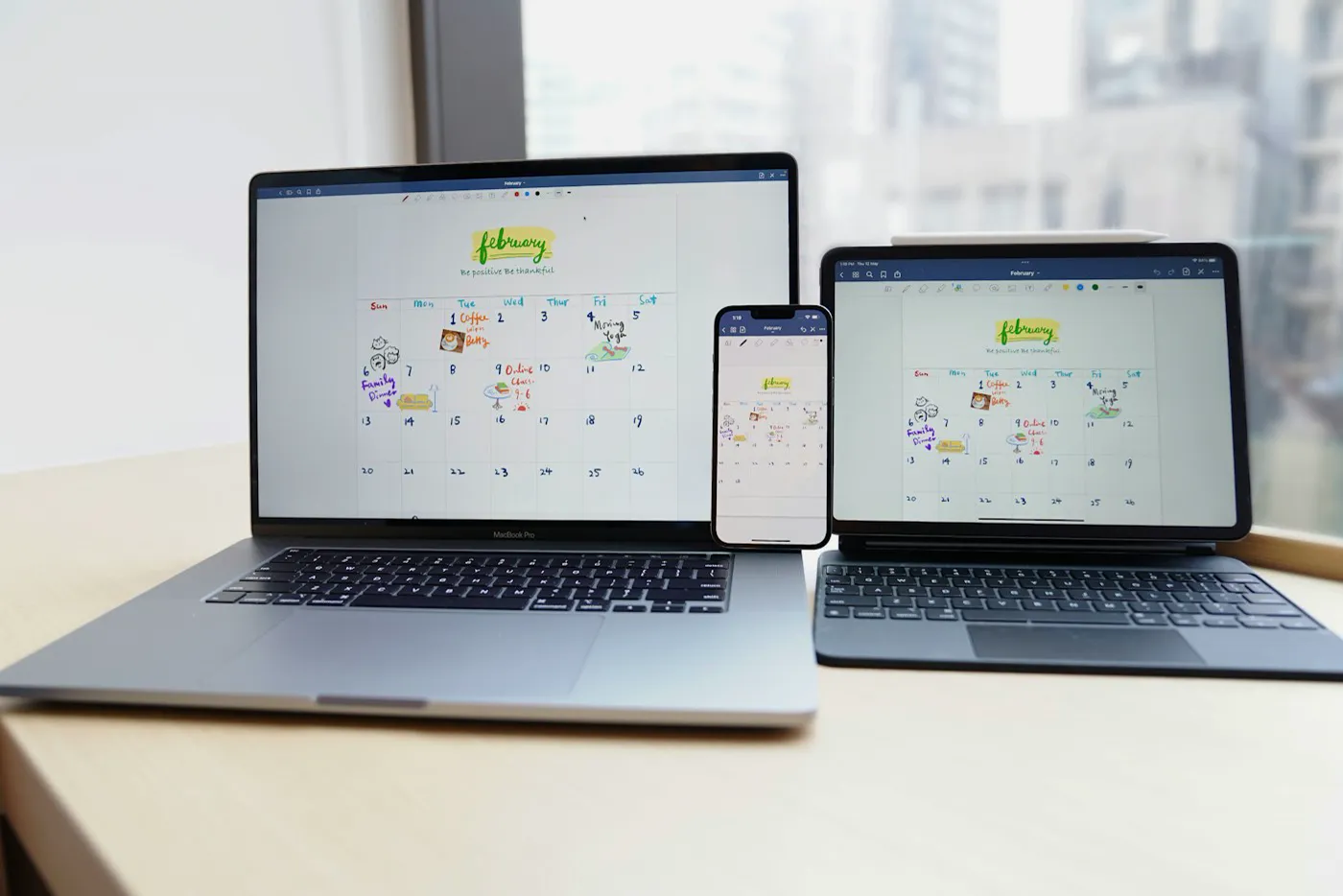
Booking adds the steps after understanding: the customer picks a service, picks an available time, and receives a confirmation. Behind that sit a few things worth planning for:
- Your real availability. The calendar is only useful if it reflects when you can actually work, including travel time between jobs if that applies.
- Confirmations and reminders. These reduce no-shows and save the confirmation calls most businesses currently make by hand.
- Rules about changes. How far in advance can someone cancel or reschedule, and what happens if they do not turn up.
None of this is complicated, but it does need deciding. The booking system will enforce whatever rules you give it, so it is worth giving it the right ones.
The in-between case
Some businesses have both kinds of customer: standard services that can be booked directly, and larger jobs that need a conversation. That is common and easy to handle. The site offers booking for the standard services and a clear enquiry route for everything else, and visitors choose the path that fits.
What it costs us to build, for reference
We publish our prices, so for comparison: our Launch Site, a website of up to five sections with an enquiry form on your domain, is S$2,800. Our Website + Online Booking package, which adds service selection, calendar booking and confirmations, is S$3,300 one-time, and you own the code and the accounts in both cases. If you are unsure which one fits, tell us how your last few customers found you and booked, and we will give you an honest answer.